
Baby Sleep Lighting Guide: Best Night Lights That Won’t Ruin Sleep
Discover the best baby night lights backed by sleep science. Compare red vs amber lighting, avoid common mistakes, and choose the safest option for night feeds.
By Emily Harper Baby gift expert specializing in child development research, evidence-based parenting resources, and infant product safety documentation.
2/8/20264 min read
Summary:
White and blue night lights disrupt infant sleep hormones — even when “dim”
Red light has the lowest impact on melatonin and sleep inertia
Amber light offers a visibility-friendly compromise for parents
The best baby night lights prioritize wavelength over brightness
A biologically safe night light can dramatically improve overnight sleep quality
Why Night Light Choice Matters More Than Parents Realize
Most parents buy a night light for convenience.
But biologically, your baby’s brain treats light as instruction — telling it when to sleep, wake, or stay alert. The wrong night light doesn’t just make feeds harder; it can quietly sabotage sleep consolidation night after night.
If you’ve ever wondered why your baby:
Fully wakes during night feeds
Takes longer to settle after diaper changes
Seems overstimulated despite a calm routine
…the night light is often the missing piece.
This guide will help you:
Choose the safest light color for infant sleep
Avoid misleading “nursery-friendly” marketing
Compare the best red and amber night lights by use case
Find the right option for your feeding style and room setup
Table of Contents
What Makes a Baby Night Light Truly Sleep Safe?
A sleep-safe night light is not defined by:
“Soft white” labeling
Low brightness alone
Nursery aesthetics
Instead, it comes down to wavelength.
The 3 Non-Negotiables of Sleep-Safe Lighting
Minimal Blue Wavelength Output
Blue light suppresses melatonin through retinal photoreceptors, even at low brightness.Low Lux Output (But Not Zero)
Enough light for safety — not enough to stimulate alertness.Targeted, Non-Overhead Placement
Light should illuminate your hands, not your baby’s face.
If a night light fails any of these, it may be convenient — but it’s not biologically supportive.
Red Light vs Amber Light: Which Is Better for Night Feeds?
This is the most common (and most important) buying decision.
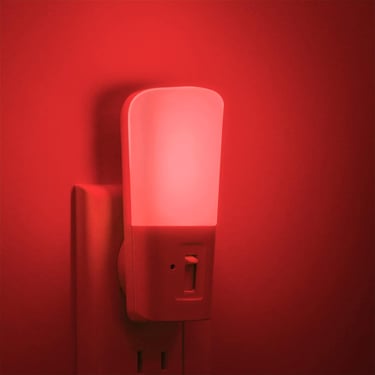
Red Light: Best for Sleep Preservation
Why parents choose it:
Lowest melatonin suppression
Keeps babies drowsy
Ideal for frequent night wakings
Best for:
Newborns
Light-sensitive babies
Parents prioritizing sleep optimization
Trade-off:
Visibility is lower — not ideal for detailed tasks unless the light is well designed.
Amber Light: Best Balance of Sleep + Visibility
Why parents choose it:
Less disruptive than white light
Easier visibility for diaper changes
Feels more “natural” to some adults
Best for:
Older infants
Parents needing more task lighting
Shared rooms or unfamiliar layouts
Trade-off:
Slightly more melatonin impact than red — but far less than white.
Common Night Light Mistakes That Cost Parents Sleep
Mistake #1: Choosing “Dim White” Lights
Dim white light still contains blue wavelengths. Brightness ≠ biological safety.
Mistake #2: Overhead or Wall-Mounted Lights
Even warm bulbs become disruptive when shining directly into a baby’s eyes.
Mistake #3: Using Phone Flashlights
Phone LEDs are extremely blue-heavy and highly stimulating.
Mistake #4: Ignoring Light Placement
The best night light fails if it’s aimed incorrectly.
Best Baby Night Lights (Science-Backed Picks)
Below are parent-tested options categorized by use case — not hype.
🔴 Best Red Light Night Lights
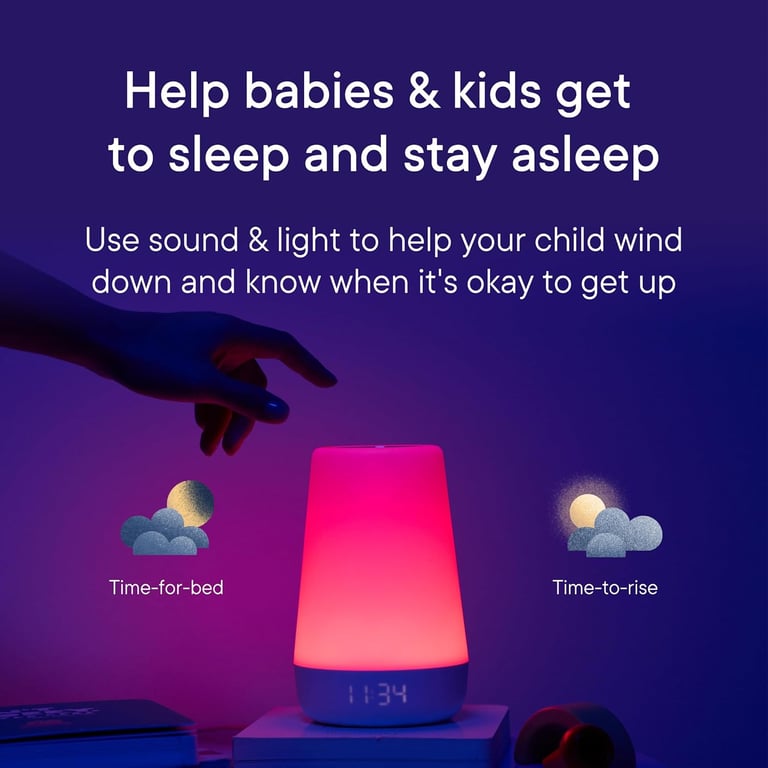
1. Hatch Rest (Red Light Mode)
Adjustable red spectrum
Timer + brightness control
Grows with your child
Best for: Parents wanting one device from newborn to toddler
Plug-in simplicity
True red wavelength
Extremely low cost
Best for: Budget-focused parents or secondary rooms
🟠 Best Amber Light Night Lights
3. Touch Egg Amber Night Light
Soft amber glow
Touch controls
Portable for feeds
Best for: Parents needing flexibility and visibility
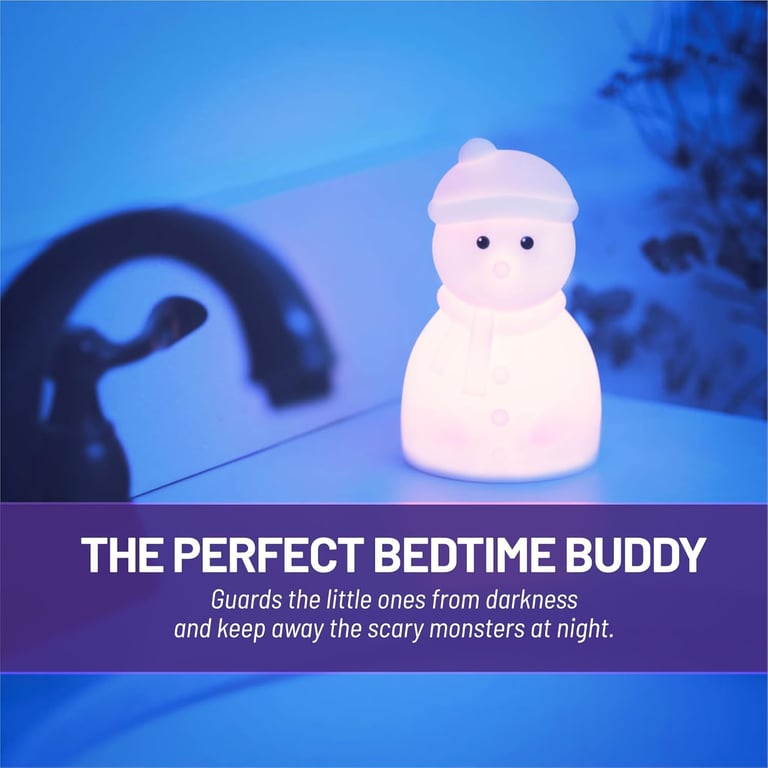
4. Lumipets Amber Silicone Light
Child-safe design
Dimmable amber output
Rechargeable
Best for: Nursery + toddler transition
Frequently Asked Questions
What color night light is best for babies?
Red light is best for preserving melatonin and keeping babies drowsy during nighttime care.
Is amber light safe for newborns?
Amber light is safer than white but slightly more stimulating than red. It’s acceptable when visibility is needed.
Can night lights really affect baby sleep?
Yes. Light is one of the strongest signals shaping infant circadian rhythm development.
Are smart night lights worth it?
They can be — especially if they offer true red light modes and brightness control.
Should I turn the night light off completely?
Total darkness is ideal, but a low red or amber light balances safety and sleep support.
Final Thoughts: Buy Less, Choose Better
The best baby sleep products aren’t always the most expensive — they’re the most biologically aligned.
A sleep-safe night light won’t magically fix every wake-up. But it removes a hidden obstacle that quietly undermines sleep night after night.
When parents change lighting, they’re often shocked by how quickly feeds become calmer and sleep returns faster.
That’s not coincidence.
That’s biology working with you instead of against you.
Related Articles:
Essentials for Newborns: The Ultimate Gift Guide for New Parents
How to Create the Ultimate Baby Registry: A Step-by-Step Guide
Low-Light Sleep Lamps for Babies: Complete Guide
Practical Baby Gifts That Help New Parents Sleep Better
Top Baby Gifts That Grow with Your Child: Smart, Long-Lasting Picks
Why White Light Is Ruining Your Baby’s Sleep (And What to Use Instead)