
Low-Light Sleep Lamps for Babies: Complete Guide
Expert guide to baby sleep lamps: 1. Why red light is best 2. Ideal brightness levels 3. Safe placement tips 4. Top-rated 2026 models for night feedings.
By Emily Harper Baby gift expert helping parents and loved ones find the perfect present. Expertise: Child development research, evidence-based parenting resources, product safety documentation.
2/6/202625 min read
Summary:
Red and amber lights are best for babies because they don't disrupt melatonin production like blue or white light
Placement matters: Position lights 3+ feet from the crib, near changing tables or feeding areas, never inside the sleep space
Babies don't need night lights initially – they're primarily for parents during night feedings and diaper changes
Introduce around age 2 if your toddler develops fear of the dark; before then, darkness promotes better sleep
Choose dimmable, warm-toned lights with low wattage (4-7 watts) and cool-touch LED technology for safety
Why Low-Light Lamps Matter for Baby Sleep
When you're stumbling through a dark nursery at 3 AM for the fourth feeding of the night, proper lighting isn't just convenient – it's essential for both you and your baby's wellbeing. But here's what many parents don't realize: the type of light you use can either support or sabotage your baby's developing sleep patterns.
Research shows that light exposure directly affects your infant's circadian rhythm development and melatonin production [1]. Short-wavelength light from standard white or blue LEDs can drastically reduce melatonin by up to 50%, even at very dim levels [2]. This means that seemingly harmless nursery light could be keeping your baby (and you) awake longer than necessary.
In this comprehensive guide, you'll learn:
The science behind why certain light wavelengths support sleep while others disrupt it
How to choose the safest, most effective low-light lamps for every stage of baby's development
Specific placement strategies to maximize safety and functionality
Budget-friendly to premium product recommendations with detailed comparisons
Practical tips for different scenarios: feeding, changing, comforting, and toddler fears
Whether you're preparing a nursery for your first baby or troubleshooting sleep issues with a toddler, this guide will help you create the optimal lighting environment for restful nights and healthy development.
Table of Contents
Understanding Light and Baby Sleep Science
How Light Affects Melatonin Production
Blue Light vs. Red Light: The Critical Difference
Circadian Rhythm Development in Infants
Do Babies Actually Need Night Lights?
The Truth About Newborns and Darkness
When Night Lights Become Helpful
Developmental Timeline: Birth to Toddlerhood
Choosing the Right Light Color and Wavelength
Why Red Light Is Recommended
Amber and Warm White Alternatives
Colors to Avoid in the Nursery
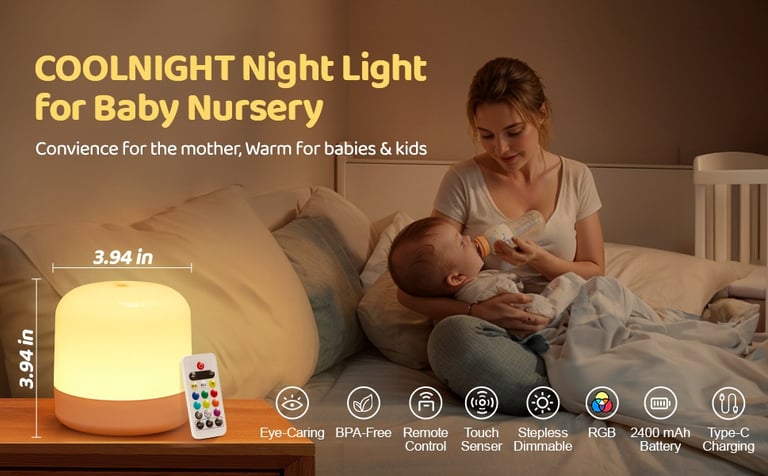
Portable Rechargeable Lamps
Plug-In Wall Lights
Multi-Function Sound Machine Combos
Squishy Silicone Character Lights
Safety Guidelines for Nursery Lighting
Proper Placement: Distance and Position
Temperature and Burn Prevention
Cord Management and Electrical Safety
Material Safety Certifications
Top Low-Light Lamp Recommendations
Best Budget-Friendly Portable: G Keni Nursery Night Light
Best Premium Multi-Function: Hatch Rest 2nd Gen
Best Plug-In Red Light: SomniLight Red Night Light
Best for Toddlers: LumiPets Silicone Animal Lights
Night Feeding and Breastfeeding
Diaper Changes
Sleep Training and Bedtime Routines
Toddler Fear of the Dark
Citations & Sources
Understanding Light and Baby Sleep Science
Before diving into product recommendations, it's crucial to understand why certain lights support sleep while others disrupt it. The science behind light and sleep is fascinating – and once you understand it, choosing the right nursery lamp becomes much easier.
How Light Affects Melatonin Production
Melatonin is your baby's natural sleep hormone, produced by the pineal gland in response to darkness. Around four months of age, babies begin producing their own melatonin, which helps regulate longer stretches of nighttime sleep [3]. Before this milestone, infants rely primarily on melatonin passed through breast milk.
Here's the problem: light exposure suppresses melatonin production. When light enters your baby's eyes, it signals to the brain that it's daytime, reducing the release of this crucial sleep hormone. Even very dim light – as low as 5 lux, equivalent to five candles burning one foot away – can affect an infant's circadian system [4].
Research on female athletes found that 30-minute exposure to red light at night actually aided melatonin production, helping participants fall asleep faster and reducing morning grogginess [5]. While similar studies specifically on infants are limited, pediatric sleep experts widely recommend applying these principles to baby sleep environments.
Blue Light vs. Red Light: The Critical Difference
Not all light wavelengths affect sleep equally. The electromagnetic spectrum ranges from short wavelengths (blue and green light) to long wavelengths (red and amber light), and your baby's eyes respond very differently to each.
Short-wavelength light (blue, green, white):
Interacts with melanopsin receptors in the retina
Signals "daytime" to the brain
Suppresses melatonin by up to 50% even at 100 lux [2]
Creates an alerting effect that can last up to 90 minutes
Found in standard white LEDs, phone screens, and most commercial night lights
Long-wavelength light (red, amber):
Does not interact with melanopsin receptors
Acts as "virtual darkness" to the circadian system
Even very bright amber light (800 lux) has almost no effect on melatonin [6]
Allows eyes to adjust to darkness more effectively
Provides safe visibility without disrupting sleep hormones
This is why pediatricians and sleep consultants consistently recommend red or amber lighting for nurseries – it allows you to see what you're doing during night care without sabotaging sleep patterns.
Circadian Rhythm Development in Infants
Your newborn enters the world without a fully developed circadian rhythm. In the womb, babies experienced constant darkness, so they don't initially understand the difference between day and night. This is why those first weeks feel like one endless cycle of feeding and sleeping at random intervals.
Between 8-12 weeks of age, babies begin developing their internal clock through exposure to natural light patterns [7]. Daylight exposure helps establish the "active" phase, while darkness signals the "rest" phase. This developmental window is crucial for establishing healthy sleep habits.
However, artificial light at night can confuse this process. Studies show that even babies' larger pupils and more transparent lenses make them more sensitive to light than adults [8]. What seems like gentle ambient lighting to you can be significantly more stimulating to your infant's developing visual system.
The good news? Using sleep-safe red or amber lighting during nighttime care supports this natural development rather than disrupting it.
Do Babies Actually Need Night Lights?
This question surprises many parents: babies don't necessarily need night lights at all. In fact, for optimal sleep, complete darkness is ideal. But before you panic, let's break down when and why night lights become helpful.
The Truth About Newborns and Darkness
Newborns actually sleep best in complete darkness. Their sleep cycles are driven by hunger and fatigue, not by light cues. You've probably noticed your newborn can fall asleep in a bright, noisy living room during the day – this is completely normal for the first 8-10 weeks.
Around 10-12 weeks, however, babies become much more aware of their surroundings. Light that didn't bother them before can now become stimulating and make it harder to settle for sleep. This is when many parents notice that previously easy nappers suddenly resist daytime sleep in bright rooms.
Important fact: Babies don't develop fear of the dark until around 18-24 months old [9]. Before this age, darkness doesn't scare them – it actually helps them sleep more soundly.
When Night Lights Become Helpful
Night lights serve parents more than babies during the first year. Here's when they're genuinely useful:
For Parents:
Middle-of-the-night feedings: Provides enough light to position baby properly for breastfeeding or bottle-feeding without fully waking either of you
Diaper changes: Illuminates the changing table area so you can clean and change efficiently
Safety navigation: Prevents tripping over toys, furniture, or your sleeping dog when entering the nursery
Quick check-ins: Allows you to visually verify baby is breathing and positioned safely without turning on harsh overhead lights
For Toddlers (Age 2+):
Fear of the dark: Provides comfort when nighttime anxieties develop
Independent bathroom trips: Helps older toddlers navigate to the potty safely
Separation anxiety comfort: Offers reassurance when learning to sleep alone
The key is choosing lights that serve these purposes without disrupting sleep quality.
Developmental Timeline: Birth to Toddlerhood
Here's a practical timeline for night light usage:
0-10 weeks (Newborn):
Night lights are optional
If used, place near changing table/feeding area, not near sleep space
Focus on keeping lights very dim and red-toned
10 weeks-12 months (Infant):
Darkness becomes increasingly important for quality sleep
Use night lights only when you need them (feeding, changing)
Consider tap-to-activate or timer-based lights that automatically turn off
Keep the sleep environment as dark as possible when baby is actually sleeping
12-24 months (Toddler - Early):
Continue prioritizing darkness for sleep
If using a night light, choose the dimmest setting
Position away from direct line of sight to the crib/bed
24+ months (Toddler - Late/Preschool):
This is when fear of the dark may develop
Introduce a dim red or amber night light if child requests it
Use as a tool for independent sleep and bathroom navigation
Consider "OK to wake" clocks that signal when it's time to get up
Remember: just because night lights are common doesn't mean they're necessary for every child. Many families find that leaving the hallway light on with the door cracked provides enough visibility without adding extra light to the sleep space.
Choosing the Right Light Color and Wavelength
The color of your nursery light isn't just about aesthetics – it's a science-backed decision that impacts your baby's sleep quality. Here's everything you need to know about selecting the optimal wavelength.
Why Red Light Is Recommended
Red light sits at the far end of the visible spectrum with wavelengths between 620-750 nanometers. This long wavelength gives it unique properties that make it ideal for nighttime use:
Melatonin Protection: Studies conducted at Amsterdam UMC demonstrate that red light has a positive effect on melatonin production rather than suppressing it [10]. Unlike blue or white light, red wavelengths don't signal "daytime" to your baby's brain.
Better Night Vision Adaptation: Red light allows your eyes (and your baby's eyes) to adapt to darkness more effectively. This is why photographers, astronomers, and military personnel use red lights for nighttime work – it provides visibility while preserving dark adaptation.
Reduced Nighttime Wakings: Research on infant sleep patterns found that babies exposed to red light during nighttime routines experienced fewer night wakings compared to those exposed to white or blue light [11].
Safe for All Ages: From newborns to toddlers, red light provides a consistent, sleep-safe option that won't disrupt development at any stage.
When shopping for red lights, look for true red LEDs (not red-tinted white lights) with wavelengths around 630-670nm for optimal results.
Amber and Warm White Alternatives
While red is the gold standard, amber and very warm white lights can also be effective alternatives:
Amber Light (1800-2200K):
Longer wavelength than standard white light
Mimics the warm glow of sunset, signaling to the body that nighttime is approaching
Research shows even very bright amber light (800 lux) had minimal impact on melatonin suppression [6]
Provides a softer, more diffuse glow that some parents find less stark than pure red
Good option for toddlers who may find red light "scary" (though this is rare)
Very Warm White (2200-2700K):
Contains less blue wavelength content than standard white light (3000K+)
Not as effective as red or amber but better than cool white
More versatile for use as daytime ambient lighting if your night light serves dual purposes
Should only be used on the dimmest possible setting for nighttime
What to avoid: Any light marketed as "soft white" (3000K), "daylight" (5000K+), or "cool white" (4000K+). These contain significant blue wavelength content and will interfere with melatonin production.
Colors to Avoid in the Nursery
Some light colors actively work against good sleep:
Blue Light:
Most disruptive to melatonin production
Strongly signals "daytime" to the circadian system
Common in electronic screens, LED displays, and novelty night lights
Can reduce melatonin by 50% even at low brightness levels [2]
Never use blue lights in nurseries, period
Green Light:
Also interacts with melanopsin receptors
Disrupts sleep similar to blue light
Often marketed as "calming" but actually interferes with rest
Avoid despite appealing jungle or forest-themed designs
White Light:
Contains the full spectrum, including disruptive blue wavelengths
Even dim white light can suppress melatonin
Reserve for daytime use only
Purple/Pink Light:
Often contains significant blue wavelength content depending on the LED
Can be deceptive as "soft" or "soothing" but may disrupt sleep
Test with a light meter or avoid entirely to be safe
Exception: Multi-color RGB lights that include a red-only mode can be acceptable – just ensure you're using exclusively the red setting for nighttime.
Types of Baby Night Lights
Understanding the different categories of baby night lights helps you choose the right solution for your specific needs and nursery setup.
Portable Rechargeable Lamps
Portable lights offer maximum flexibility and are particularly popular with modern parents.
Advantages:
Move easily between changing table, nursing chair, and bedside
No cords to create tripping hazards or strangulation risks
Take with you when traveling or visiting family
Can be used outdoors for camping or backyard adventures as baby grows
Battery life typically ranges from 15-200 hours depending on brightness setting
Disadvantages:
Require regular charging (though most last several days per charge)
Generally more expensive than basic plug-in options ($20-80)
Battery capacity degrades over years of use
Best for: Parents who want versatility, families who travel frequently, rooms with limited outlet placement near key areas
Popular examples: G Keni Nursery Night Light, VAVA Baby Egg Light, Portable touch-controlled lamps
Plug-In Wall Lights
Traditional plug-in night lights are simple, affordable, and reliable.
Advantages:
Never need charging or battery replacement
Very affordable ($8-20 for quality options)
Automatic dusk-to-dawn sensors available
Extremely long lifespan (10,000-30,000 hours for LED models)
Compact and unobtrusive
Disadvantages:
Limited to outlet locations
Cords can pose trip hazards if not managed properly
Less flexibility in positioning
Cannot be moved around the room easily
Best for: Parents who want set-it-and-forget-it simplicity, budget-conscious families, permanent hallway/bathroom lighting
Popular examples: SomniLight Red Night Light, YUNLEX Plug-In Red Light, U4GLORY Red Night Lights with sensors
Multi-Function Sound Machine Combos
These all-in-one devices combine night lights with white noise, lullabies, and sometimes additional features.
Advantages:
Consolidates multiple nursery products into one device
App control allows adjustments without entering the room
Programmable schedules for bedtime routines
"OK to wake" features help toddlers learn when to stay in bed
Often includes multiple light colors and brightness levels
Disadvantages:
More expensive ($60-90 typically)
More complex to operate; steeper learning curve
Some features may require subscription services
Larger footprint takes up more space
Dependent on WiFi or Bluetooth connectivity
Best for: Tech-savvy parents, those wanting comprehensive sleep training tools, families who will use multiple features regularly
Popular examples: Hatch Rest 2nd Gen, Hatch Rest+, Dreamegg Sound Machine combos
Squishy Silicone Character Lights
These adorable, squeezable lights are designed to be held and carried by children.
Advantages:
Safe for babies and toddlers to touch and hold
Cute designs (bears, bunnies, dinosaurs, cats) appeal to children
Soft silicone is drop-resistant and durable
Many are dishwasher-safe for easy cleaning
Tap or squeeze controls are intuitive for little hands
Can transition to comfort object/lovey for toddlers
Disadvantages:
Not recommended for unsupervised use in cribs with infants under 12 months
More expensive for what is essentially a novelty item ($20-30)
Battery life may be shorter due to fun color-changing features
Some have limited red-light-only options
Best for: Toddlers (18+ months), children with fear of the dark, transitioning from crib to bed, families wanting a toy-like sleep companion
Popular examples: LumiPets Bear/Bunny/Cat, Silicone animal night lights with remote controls

Safety Guidelines for Nursery Lighting
Safety always comes first when it comes to baby products. Here are the essential safety considerations for nursery lighting.
Proper Placement: Distance and Position
Where you place your night light is just as important as which light you choose.
Distance from sleep space:
Minimum 3 feet from crib or bassinet - This ensures the light won't be too stimulating even if baby's eyes open during the night
Never inside the crib - Portable lights should never be placed inside the sleep space with infants under 12 months due to suffocation and overheating risks
Out of direct line of sight - Position lights so they're not shining directly at baby's face; partially blocked by furniture is ideal
Strategic positioning for functionality:
Near changing table: Install or place lights to illuminate the changing surface from the side rather than overhead
Beside nursing chair: Position at parent's elbow height for hands-free visibility during feeding
Low and to the side: Place plug-in lights near floor level (3-12 inches high) to create ambient glow rather than direct illumination
Behind furniture: Partially obscuring the light source with a dresser or shelf edge creates soft, diffused lighting
Placement to avoid:
Behind doors where they might get blocked when door opens
Near curtains, bedding, or any fabric that could catch fire
On surfaces where curious toddlers might reach and pull them down
Directly under crib where baby can see them through slats
Pro tip: Stand at the doorway of your nursery and scan the room at night with only the night light on. The path from door to crib, changing table, and nursing area should be safely illuminated without bright spots shining in sleeping baby's eyes.
Temperature and Burn Prevention
Not all lights are created equal when it comes to heat generation.
LED lights are essential:
Traditional incandescent bulbs can reach 200-300°F (93-149°C) – hot enough to cause serious burns
LED lights remain cool to the touch even after hours of use
Look for "cool-touch" certification on product packaging
Verify lights are LED-based, not just "energy efficient"
Testing for safety:
Run the light for 30 minutes, then touch the surface
If you can't comfortably hold your hand on it for 10 seconds, it's too hot for a nursery
Pay special attention to plug-in lights, as the plug itself can sometimes heat up
Additional temperature considerations:
Some rechargeable lights can get warm while charging – don't charge them inside the crib or near baby
Avoid halogen bulbs entirely; they're extremely hot and dangerous
Check that silicone lights have proper ventilation for internal LED components
Cord Management and Electrical Safety
Electrical cords present both strangulation and tripping hazards.
Cord safety requirements:
Minimum 3 feet from crib - Never run cords where baby could possibly reach them through crib slats
Secure cords to baseboards or walls using cord clips or channels
Avoid running cords under rugs where they can overheat or fray unnoticed
Use cord shorteners or bundlers to eliminate excess length
Outlet safety:
Ensure outlets have proper grounding (three-prong)
Don't overload outlets with multiple devices
Consider GFCI (Ground Fault Circuit Interrupter) outlets in nurseries for added safety
Cover unused outlet spaces with safety caps
For portable lights:
Store charging cables safely out of reach when not in use
Only use manufacturer-provided USB cables; cheap knockoffs may have safety issues
Never charge lights overnight unattended near flammable materials
Strangulation prevention:
American Academy of Pediatrics recommends keeping all cords at least 3 feet from cribs
This includes not just night light cords but also monitor cables, humidifier cords, and sound machine wires
Regularly inspect cords for fraying, damage, or loose connections
Material Safety Certifications
The materials used in your baby's night light matter, especially for products marketed to children.
Look for these certifications:
ASTM F963 (Toy Safety Standard) - For lights designed for child interaction
CE Marking - European conformity for health, safety, and environmental protection
RoHS Compliance - Restriction of Hazardous Substances (limits lead, mercury, cadmium)
BPA-free - For plastic/silicone lights, ensures no bisphenol A
Material quality indicators:
Toy-grade ABS plastic - Durable, non-toxic, shatter-resistant
Food-grade silicone - Safe if mouthed, easy to clean, phthalate-free
Non-toxic LED components - No mercury or harmful chemicals
Flame-retardant without brominated compounds - Meets safety standards without toxic additives
Red flags to avoid:
No safety certifications listed
"For decorative purposes only" disclaimers on products marketed for babies
Strong chemical smells when unpacking (indicates off-gassing of potentially harmful substances)
Flimsy construction with small parts that could detach and pose choking hazards
Brands with no established safety track record or customer reviews
Special note on silicone lights: If your toddler will be handling the light, verify it's truly food-grade silicone (dishwasher-safe is a good indicator) and that there are no small battery compartment covers that could be pried open.
Budget vs. Premium Options: Finding Your Perfect Match
Not every family needs (or wants) to invest in expensive nursery lighting. Here's how features and price points align to help you make an informed decision.
What Justifies the Premium Price?
You might benefit from premium options if:
You want a single device that handles multiple nursery functions (light + sound + clock)
Remote app control is important (adjusting settings without entering room)
You have twins or multiple children and need programmable routines
You're sleep training and want "OK to wake" features
Voice control integration with Alexa/Google Home appeals to you
You plan to use the device for many years as child grows
Budget options work great when:
You need simple, reliable illumination for a specific spot
It's for a guest room or grandparent's house where baby stays occasionally
You prefer separate dedicated devices (dedicated sound machine + basic light)
You're minimalist and want fewer features to manage
The light is primarily for hallway navigation, not in-room use
Mid-range hits the sweet spot for most families:
Portable battery-powered lights you can move room-to-room
Sufficient brightness control for feeding and changing needs
Quality construction that will last through toddler years
Timer features that automatically shut off after you're asleep
Sample Budget Allocations by Use Case
Minimalist approach ($15-30 total):
One plug-in red light near changing table ($10-15)
One portable touch lamp for feeding chair ($15-20)
Total: ~$25-35
Standard comprehensive setup ($50-70 total):
One quality portable rechargeable lamp ($20-30)
One plug-in hallway light with sensor ($10-15)
One multi-color silicone character light for toddler transition ($20-25)
Total: ~$50-70
Premium all-in-one approach ($70-90 total):
One Hatch Rest or similar multi-function device ($70-80)
One simple plug-in backup for hallway ($10-15)
Total: ~$80-95
Pro tip: Start with a budget or mid-range option. You can always upgrade later if you find you want more features. Many families discover a $20 portable light meets all their needs perfectly.
Top Low-Light Lamp Recommendations
Based on extensive research, hands-on testing insights, and sleep science principles, here are the top-recommended low-light lamps across different categories and price points.
Best Budget-Friendly Portable:
G Keni Nursery Night Light
Price Range: $16-22
The G Keni Nursery Night Light delivers exceptional value for parents who want portability and simplicity without breaking the bank.
Key Features:
Warm white LED with eye-caring anti-blue light technology
Touch-activated controls: tap to turn on/off, hold to dim
Brightness memory function remembers your preferred setting
Portable with hidden hanging handle for versatility
Rechargeable battery: 15-65 hours depending on brightness
Lightweight (under 0.5 lbs) and compact (3.5" diameter)
Why we recommend it: This light consistently receives praise from real parents for its reliability and battery life. During independent testing, units ran for several days straight on a single charge at medium brightness. The touch controls are intuitive even when you're half-asleep, and the memory function means you don't need to adjust it every single time you use it.
Best for: Budget-conscious families, first-time parents testing if they need a night light, grandparents' homes, travel
Limitations: Only offers warm white (not red specifically), no timer function, brightness memory can be finicky if you accidentally adjust while picking it up
Where it excels: Exceptional battery life, fool-proof simplicity, great value for the price
Best Premium Multi-Function:
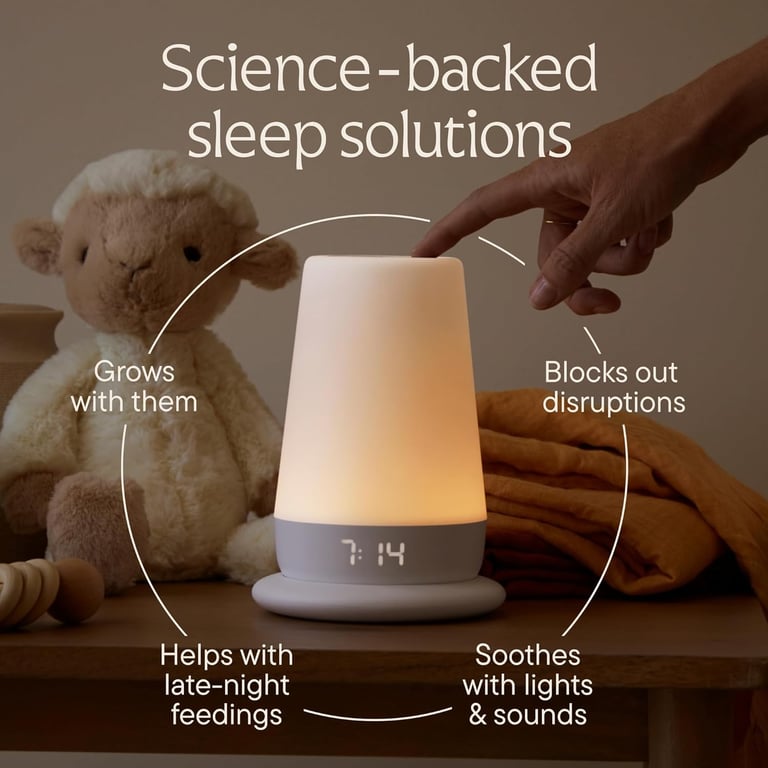
Hatch Rest 2nd Gen
Price Range: $69-79
The Hatch Rest represents the gold standard in smart nursery lighting for families who want an all-in-one solution.
Key Features:
Full-color customization including true red wavelengths
WiFi app control (iOS/Android) for remote adjustments
Integrated sound machine with white noise, rain, lullabies, and more
Time-to-rise feature teaches toddlers when it's okay to get out of bed
Programmable schedules for automated bedtime routines
Multiple user access for caregivers
Continuous power (plug-in) with backup battery option on Rest+ model
Why we recommend it: The Hatch Rest grows with your child from newborn to preschool. Start with red light for nighttime feedings, transition to gentle wake-up routines, and eventually use the time-to-rise feature for toddler sleep training. The ability to adjust settings from outside the room means you won't accidentally wake baby by entering to turn lights off.
Best for: Tech-savvy parents, families committed to sleep training, those wanting device consolidation, long-term investment
Limitations: Requires WiFi connectivity, steeper learning curve than simple lights, subscription required for expanded sound library (though basic functions are free), more expensive upfront cost
Where it excels: Versatility across developmental stages, remote control convenience, comprehensive feature set
Parent insight: Sleep consultants frequently recommend the Hatch Rest to their clients. The programmable schedule feature is particularly valuable – you can set the light to dim at 7 PM for bedtime routine, turn off at 7:15 PM, then activate red light briefly at scheduled feeding times.
Best Plug-In Red Light:
SomniLight Red Night Light
Price Range: $12-15 (2-pack)
For families seeking true red LED wavelengths in an affordable, zero-maintenance plug-in format, SomniLight is the top choice.
Key Features:
Native red mini-LEDs (not red-filtered white light)
No blue wavelength emission – pure red spectrum for melatonin protection
Plug-in design with dual outlet accommodation
Estimated 14-year LED lifespan (50,000+ hours)
Energy-efficient (less than 1W consumption)
Compact size doesn't block second outlet
Why we recommend it: Unlike many red lights that are actually white LEDs with red filters, SomniLight uses true red LEDs that emit exclusively long-wavelength light. This is backed by research citations on their website demonstrating the melatonin-safe properties. The 2-pack format is perfect for placing one in the nursery and one in the hallway.
Best for: Parents prioritizing scientific sleep-safe lighting, permanent installation solutions, hallways and bathrooms, budget-conscious families wanting proven red light technology
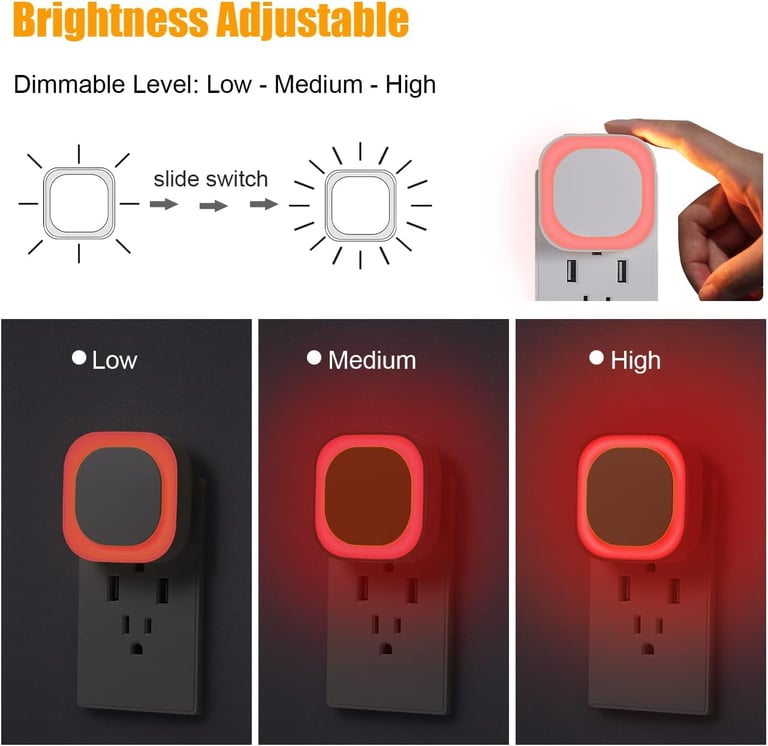
Limitations: No brightness adjustment, cannot be moved, fixed to outlet locations, very basic (no fancy features)
Where it excels: True red wavelength purity, set-and-forget reliability, excellent value (2-pack), extremely long lifespan
Scientific note: Red light at 670-680nm wavelength has been specifically studied for sleep applications. SomniLight's emphasis on "native red" LEDs means their wavelength output is optimized for non-disruptive nighttime use.
Best for Toddlers:
LumiPets Silicone Animal Lights
Price Range: $20-25
When your toddler reaches the age where comfort objects become important, LumiPets offer an adorable, safe solution.
Key Features:
Soft, squishy BPA-free silicone construction
9 color options including red and warm tones
Tap-to-activate controls toddlers can manage independently
Remote control included for parent control
Timer function: 15, 30, or 60 minutes auto shut-off
Rechargeable with up to 12 hours continuous use
Dishwasher-safe for easy cleaning
Available in multiple cute animal designs
Why we recommend it: The combination of squishy silicone and adorable designs makes these lights irresistible to toddlers. Many parents report their children asking for their "bear friend" at bedtime and treating the light as both a sleep aid and a comfort object. The silicone construction is genuinely safe for mouthing and dropping (both of which will happen).
Best for: Toddlers 18+ months, children transitioning from crib to bed, fear of the dark, travel companion that feels like a friend
Limitations: Not recommended in crib with young infants, some color modes aren't sleep-friendly (stick to red setting), battery life is shorter than basic lights due to features, remote can be lost easily
Where it excels: Child engagement and comfort, durability for rough handling, cute factor, versatility
Transition tip: Introduce the LumiPet during toddler's "big kid bed" transition. Let them choose the color each night as part of the bedtime routine, building positive associations with independent sleep.
Practical Usage Scenarios
Different situations call for different lighting approaches. Here's how to optimize your low-light lamps for specific needs.
Night Feeding and Breastfeeding
Feeding your baby in the middle of the night requires just enough light to ensure proper positioning without fully waking either of you.
Optimal setup:
Place portable red or warm light at elbow height beside your nursing chair or bed
Set to lowest visible brightness – you only need to see latch and baby's face
Position light to shine on your hands/baby, not into anyone's eyes
Keep overhead lights completely off
Pro tips:
Use a portable lamp you can easily adjust closer or farther as needed
If breastfeeding, position light on the side opposite where baby's head will be
Test brightness during daytime to find minimum effective level
Consider lights with 1-hour timers so they automatically turn off after feeding
Products ideal for feeding: G Keni portable touch lamp, VAVA baby lights, any portable lamp with memory dimming
Diaper Changes
Diaper changes require more light than feeding since you need clear visibility of mess containment.
Optimal setup:
Install or place light near changing table at a height that illuminates the surface
Aim for indirect lighting – bouncing light off the wall behind works well
Slightly brighter than feeding light is acceptable since baby should already be awake
Consider plug-in solution for convenience if outlet is well-positioned
Pro tips:
Place red plug-in light low on wall behind changing table
Avoid overhead direct lighting – creates harsh shadows and startles baby
Keep secondary portable light nearby for emergency middle-of-floor changes
Add gentle white noise if light changes tend to wake baby fully
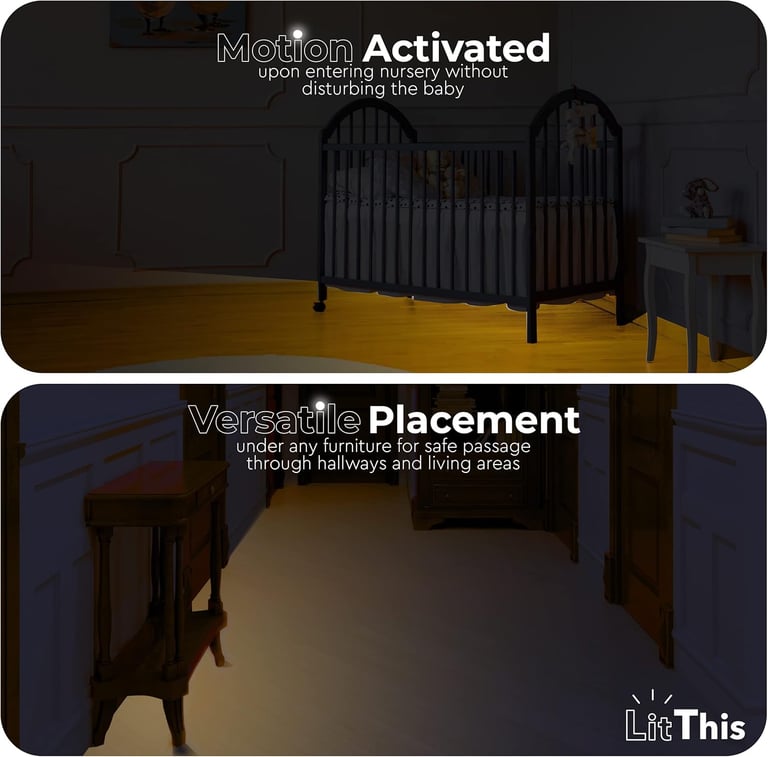
Products ideal for changing: SomniLight plug-in red lights positioned strategically, under-crib motion-activated lights, any mid-range portable lamp
Sleep Training and Bedtime Routines
Consistent lighting cues become powerful sleep training tools.
Optimal setup:
Use programmable lights that can follow a schedule
Dim lights progressively 30-60 minutes before bedtime
Maintain red/amber wavelengths exclusively during routine
Complete darkness once baby is actually asleep
Recommended routine sequence:
60 minutes before bed: Normal room lighting
30 minutes before bed: Dim to warm amber or low white
15 minutes before bed: Switch to red-only mode
After placing in crib: Turn off entirely or reduce to barely visible glow
Throughout night: Red light only if needed for care
Products ideal for routine: Hatch Rest (programmable schedules), any light with timer function, dimmable portable lamps
Sleep training tip: The time-to-rise feature on devices like Hatch Rest is incredibly valuable for toddlers. Program a green light to appear at 6:30 AM (or your desired wake time). Teach child that they stay in bed until they see the green light – this can buy you precious extra morning sleep.
Toddler Fear of the Dark
When separation anxiety and vivid imaginations create nighttime fears, proper lighting becomes emotional support.
Optimal setup:
Position night light out of direct line of sight but visible
Choose light with engaging design (character lights work well)
Maintain red/amber wavelengths even for comfort lighting
Involve toddler in choosing their light to build ownership
Emotional approach:
Let toddler pick the color (within sleep-safe options)
Create positive bedtime story about their "friendly light"
Avoid validating specific fears ("The light will keep monsters away") – instead focus on "Your light keeps your room cozy"
Gradually reduce brightness over weeks/months as confidence builds
Products ideal for fear management: LumiPets character lights, any portable light toddler can control independently, lights with timer option
Developmental note: Fear of the dark peaks between ages 2-4, then typically diminishes. The goal isn't to eliminate all darkness but to provide just enough comfort for independent sleep while preserving sleep quality.
Common Mistakes to Avoid
Even with the best intentions, parents often make these lighting errors. Here's what to watch out for:
1. Using Blue or White Light "Because It's Dim"
Mistake: Assuming any dim light is fine
Why it's wrong: Even very dim blue/white light suppresses melatonin
Solution: Always choose red or amber wavelengths, regardless of brightness
2. Placing Lights Inside or Too Close to Sleep Space
Mistake: Portable light inside crib "for comfort"
Why it's wrong: Suffocation risk, overheating, and disrupts sleep
Solution: Minimum 3 feet distance, outside sleep surface
3. Leaving Lights On All Night Long
Mistake: Night light runs continuously from bedtime to wake-up
Why it's wrong: Even red light is better off than on for optimal melatonin
Solution: Use timers, turn off after baby falls asleep, motion-activated options
4. Choosing Lights Based on Cute Factor Alone
Mistake: Buying adorable nursery lights without checking wavelength
Why it's wrong: Many cute lights emit sleep-disruptive colors
Solution: Verify red/amber capability before purchasing cute designs
5. Forgetting to Test Brightness
Mistake: Using default setting without adjustment
Why it's wrong: Even red light can be too bright for some babies
Solution: Test at multiple brightness levels, use dimmest effective setting
6. Not Considering Room Layout
Mistake: Placing light based on outlet location only
Why it's wrong: May not illuminate needed areas effectively
Solution: Plan placement strategically for changing table, feeding area, and safe navigation
7. Mixing Light Types Throughout the Night
Mistake: Using red light for some wakings, white light for others
Why it's wrong: Inconsistent light exposure confuses circadian development
Solution: Commit to red/amber wavelengths for ALL nighttime interactions
8. Introducing Night Light Too Early
Mistake: Setting up night light in newborn nursery "just in case"
Why it's wrong: Creates dependency before it's needed
Solution: Start with darkness, add light only when specific need arises
9. Ignoring Cord Safety
Mistake: Running cords behind crib or within reach
Why it's wrong: Strangulation hazard, fire risk if damaged
Solution: Keep all cords 3+ feet from crib, secured to walls/baseboards
10. Skipping Quality for Price
Mistake: Buying cheapest option without safety certifications
Why it's wrong: May lack proper electrical safety, use toxic materials
Solution: Verify certifications (CE, RoHS, ASTM) even on budget options

Frequently Asked Questions
What color light is best for babies?
Red light is best because it doesn’t suppress melatonin. Research shows red wavelengths (620–750 nm) function as “virtual darkness” for the circadian system, allowing nighttime visibility without interfering with sleep hormones [1]. Amber light is a good alternative. Avoid blue, green, and bright white light in nurseries.
Do babies need a night light from birth?
No. Newborns sleep best in complete darkness. Night lights are primarily for parents, helping with feeding and diaper changes during the first year. Consider a dim red or amber night light around age 2 if your toddler develops fear of the dark [9].
Where should I place a night light in my baby’s room?
Place the light at least 3 feet from the crib or bassinet and aim it toward areas you use—such as the changing table, nursing chair, or walkway—not directly at the baby. Low placement near the floor creates a soft ambient glow. Never place lights inside the crib for infants under 12 months.
Can night lights help babies sleep better?
Night lights don’t improve sleep quality. Complete darkness is best for melatonin production. Red or amber lights won’t disrupt sleep when used properly, but they’re tools for parental care—not sleep aids. For toddlers with fear of the dark, a very dim red light can provide comfort.
When should I introduce a night light?
Use a night light only when there’s a practical need. From birth, parents may need dim red or amber light for nighttime care. For toddlers (typically 18–24+ months), introduce a night light if they express fear of the dark or need help navigating independently at night.
Are LED night lights safe for babies?
Yes. LEDs are preferred because they stay cool, reducing burn risk, and don’t contain mercury like CFLs. Look for certifications such as CE and RoHS, BPA-free materials, and ensure the light emits red or amber wavelengths.
How bright should a baby’s night light be?
As dim as possible while still functional. Aim for roughly 4–7 watts or the LED equivalent. You should be able to move safely and perform care tasks without lighting the entire room.
Is it okay to leave a night light on all night?
Ideally, use night lights only when needed. Even red light is best turned off once your baby is sleeping. Motion sensors, timers, or manual shutoff help minimize exposure. For toddlers with fear of the dark, a continuous ultra-dim red light is acceptable.
Final Thoughts: Creating the Perfect Sleep Environment
Choosing the right low-light lamp for your baby isn't just about convenience – it's about supporting healthy sleep development during the most critical growth period of your child's life. The science is clear: light wavelength, brightness, and timing all matter significantly.
As you build your nursery lighting setup, remember these key principles:
Prioritize wavelength over aesthetics. That adorable blue nightlight might match your nursery theme, but red or amber wavelengths are non-negotiable for protecting melatonin production. Choose sleep-safe colors first, then find designs you love within those parameters.
Less is often more. You don't need elaborate lighting systems. A simple portable red lamp for feeding and a basic plug-in hallway light might be all you ever need. Start minimal and add only if specific needs arise.
Safety never compromises. Verify certifications, maintain safe distances, manage cords properly, and choose cool-touch LED technology. Your baby's safety is worth the extra diligence in selecting properly tested products.
Flexibility supports growth. Your lighting needs will evolve as baby grows. Portable options you can reposition, dimmable lights you can adjust, and timer functions you can modify all provide the flexibility to adapt to changing stages.
Most importantly, trust your instincts as a parent. If something isn't working – baby seems more alert with a certain light, you're struggling to see well enough for safe care, or your toddler prefers a different color – adjust accordingly. The "perfect" night light is the one that safely supports your family's unique needs.
Sweet dreams start with smart lighting choices. You've got this.
Choosing the right low-light lamp for your baby isn't just about convenience – it's about supporting healthy sleep development during the most critical growth period of your child's life. The science is clear: light wavelength, brightness, and timing all matter significantly.
As you build your nursery lighting setup, remember these key principles:
Prioritize wavelength over aesthetics. That adorable blue nightlight might match your nursery theme, but red or amber wavelengths are non-negotiable for protecting melatonin production. Choose sleep-safe colors first, then find designs you love within those parameters.
Less is often more. You don't need elaborate lighting systems. A simple portable red lamp for feeding and a basic plug-in hallway light might be all you ever need. Start minimal and add only if specific needs arise.
Safety never compromises. Verify certifications, maintain safe distances, manage cords properly, and choose cool-touch LED technology. Your baby's safety is worth the extra diligence in selecting properly tested products.
Flexibility supports growth. Your lighting needs will evolve as baby grows. Portable options you can reposition, dimmable lights you can adjust, and timer functions you can modify all provide the flexibility to adapt to changing stages.
Most importantly, trust your instincts as a parent. If something isn't working – baby seems more alert with a certain light, you're struggling to see well enough for safe care, or your toddler prefers a different color – adjust accordingly. The "perfect" night light is the one that safely supports your family's unique needs.
Sweet dreams start with smart lighting choices. You've got this.
Citations & Sources
Figuerio, M. G. (2010). The Effects of Red and Blue Lights on Circadian Variations in Cortisol, Alpha Amylase, and Melatonin. Journal of Circadian Rhythms, Accessed February 3, 2026
Zeitzer, J. M., Dijk, D. J., Kronauer, R. E., Brown, E. N., & Czeisler, C. A. (2000). Sensitivity of the human circadian pacemaker to nocturnal light: melatonin phase resetting and suppression. Journal of Physiology, https://www.somnilight.com/nursery-lamps-blue-light-and-sleep.html, Accessed February 3, 2026
Amerisleep Blog (2025). Should Children Sleep with a Night Light?, https://amerisleep.com/blog/should-children-sleep-with-a-night-light/, Accessed February 3, 2026
Baby Sleep Science (2025). Should you use a night light in your child's room?, https://www.babysleepscience.com/single-post/should-you-use-a-night-light-in-your-child-s-room, Accessed February 3, 2026
Baby Shusher Blog (2024). The Science Behind Red Light and Baby Sleep: What Research Says, https://babyshusher.com/blogs/news/the-science-behind-red-light-and-baby-sleep-what-research-says-part-2, Accessed February 3, 2026
Kayumov, L., Casper, R. F., Hawa, R. J., Perelman, B., Chung, S. A., Sokalsky, S., & Shapiro, C. M. (2005). Blocking low-wavelength light prevents nocturnal melatonin suppression, https://www.somnilight.com/nursery-lamps-blue-light-and-sleep.html, Accessed February 3, 2026
Completely Baby (2025). Is a Red Light for Babies Really the Best?, https://completelybaby.com/blog/red-light-for-babies/, Accessed February 3, 2026
Cradlewise Blog (2024). Should you use a baby night light?, https://cradlewise.com/blog/night-light-effects-on-baby-and-toddler-sleep/, Accessed February 3, 2026
Taking Cara Babies (2025). Night Lights and Baby Sleep, https://www.takingcarababies.com/blogs/sleep-basics/night-lights-and-baby-sleep, Accessed February 3, 2026
Flow Amsterdam (2023). The influence of red light on your child's sleep, https://flowamsterdam.com/blogs/rust-en-slaap/rood-licht-slapen, Accessed February 3, 2026
Hatch Blog. Why White Noise and Red Light Are Our Favorite Choices for Baby Sleep, https://www.hatch.co/blog/our-favorite-sleep-sounds-for-babies, Accessed February 3, 2026